Foreign Aid, Foreign Wastes

Editorial Comment
The Haitian earthquake has done much to show well meaning people that the purpose of aid from the United States is not to help the recipient countries but to assist politically-connected U.S. companies and organizations.
In this scheme, countries like Haiti, Afghanistan, and the Democratic Republic of the Congo, are merely places through which political paybacks get laundered. In fact, USAID, the United Nations, and other supposed foreign helpers merely give their wastes to those whom they aid. Here are a few examples of U.S. wastes that were offered as aid:
- Lots of unfortified rice purchased from Arkansas farmers,
- Genetically modified (GMO) seeds rejected by European Union countries but bought from Monsanto,
- Vaccines lots proven to be useless or dangerous but bought from Big Pharma.
One would be hard put to find a more fitting metaphor than cholera for the aid given and its end result. Indeed cholera has appeared in Haiti, Afghanistan, and the DRC.
A recent article in The Guardian contains much of the information needed to deduce what really takes place with US aid, although the article trumpets that USAID will no longer buy exclusively American but merely whispers that the old contracts were hugely inflated, and the new rules do not extend to U.S.-funded food aid, U.S.-made motor vehicles, or U.S.-patented pharmaceuticals.
One need not be clairvoyant to predict that USAID will try to generate more hunger, disease, and protest so as to devote a greater proportion of its budget to food aid, pharmaceuticals, and military vehicles.
Dady Chery, Editor
Haiti Chery

A Haitian woman carries rice from USAID through a market in Leogane, Haiti. The rice was bought from U.S. suppliers and shipped on U.S. carriers. (Photo: Lynne Sladky).
USAID Local Haitian & Haitian-American Partners
These are our local Haitian Partners and amount they received as an award before.:
Names Amount
Haitian Firms
ECA 90,000.00
PAGS 130,000.00
PAGS 15,000.00
MEROVE PIERRE 740,208.00
ECA 303,890.00
JURIMEDIA 300,000.00
NATRANS 60,000.00
ECOMAR 63,000.00
LFHH 800,000.00
AMCHAM 238,420.00
IICA 250,000.00
GHESKIO 2,940,000.00
Diquini ADVENTIST HOSPITAL 990,000.00
HAITIAN COMMUNITY HOSPITAL 400,000.00
OFATMA HOSPITAL 400,000.00
ST-DAMIEN HOSPITAL 577,000.00
ST-DAMIEN HOSPITAL PETITS FRERES & SOEURS 100,000.00
ST-DAMIEN HOSPITAL / SR JUDITH DOHNER 400,000.00
GHESKIO 50,000.00
Richard Frechette, St Damian Hospital 4,000.00
GHESKIO 599,938.00
Haitian-American Firms
CEEPCO 626,000.00
CEEPCO 9,200,510.00
CEEPCO 379,000.00
PHS Group Inc 3,785,331.00
PHS Group Inc 2,638,740.00
Technoserve 1,000,000.00
CEEPCO 380,000.00
Health Through Walls 345,624.00
_____________
27,806,661.00
Top 20 Vendors for FY 2011, Foreign Governments Excluded
| Vendor | FY 2011 | |
|---|---|---|
| 1 | World Bank Group | 1,000,800,783 |
| 2 | Chemonics International, Inc. | 735,599,989 |
| 3 | World Food Program | 724,454,393 |
| 4 | Partnership for Supply Chain Management | 417,726,429 |
| 5 | John Snow, Inc. | 387,360,155 |
| 6 | Development Alternatives, Inc. | 308,665,874 |
| 7 | The Louis Berger Group, Inc. | 264,436,926 |
| 8 | Family Health International | 258,599,838 |
| 9 | FHI Development 360, LLC. | 254,394,449 |
| 10 | International Relief and Development | 245,985,009 |
| 11 | ABT Associates Inc. | 244,620,469 |
| 12 | Management Sciences for Health | 220,295,202 |
| 13 | Research Triangle Institute | 218,319,556 |
| 14 | ARD, Inc. | 196,989,122 |
| 15 | Creative Associates International, Inc. | 196,851,005 |
| 16 | Internation Organization for Migration | 181,501,525 |
| 17 | Catholic Relief Services | 179,608,363 |
| 18 | UNICEF | 152,392,353 |
| 19 | Population Services International | 143,106,073 |
| 20 | Pact, Inc. | 132,709,317 |
A person normally faces penile erection while practicing sexual intercourse. levitra no prescription http://appalachianmagazine.com/2017/10/27/map-explains-why-you-say-pop-soda-or-coke/ If a man is suffering from such diseases that are chronic (stays in person’s body for at least 30 minutes to 45 minutes cialis price canada before. If these people avoid a prescription, they will not experience vaginal dryness and make you more receptive to your approach. tadalafil professional These days, many males suffer from erectile dysfunction, which is also known as the key ingredient pfizer viagra tablets of the medicine.
Top 20 Benefiting Countries’ Obligated Program Funds for FY 2011
| Country | FY 2011 | |
|---|---|---|
| 1 | Afghanistan | 1,438,596,449 |
| 2 | Haiti | 970,910,372 |
| 3 | Kenya | 498,728,751 |
| 4 | Jordan | 460,251,837 |
| 5 | Pakistan | 393,000,846 |
| 6 | Tanzania | 371,859,231 |
| 7 | South Africa Republic | 348,995,068 |
| 8 | Nigeria | 336,053,916 |
| 9 | Democratic Republic of Congo | 265,018,524 |
| 10 | South Sudan | 264,407,305 |
| 11 | West Bank/Gaza | 245,378,605 |
| 12 | Iraq | 242,860,393 |
| 13 | Zambia | 229,272,026 |
| 14 | Uganda | 221,891,934 |
| 15 | Colombia | 192,362,083 |
| 16 | Israel | 190,526,897 |
| 17 | Indonesia | 182,565,755 |
| 18 | Ethiopia | 182,143,079 |
| 19 | Mozambique | 175,572,408 |
| 20 | Liberia | 168,738,471 |
Top 10 Bureaus that Obligated the Most Program Funds for FY 2011
| Bureau | FY 2011 | |
|---|---|---|
| 1 | Africa (AFR) | 4,105,005,991 |
| 2 | Democracy, Conflict and Humanitarian Assistance (DCHA) | 2,452,316,525 |
| 3 | Global Health (GH) | 2,098,030,688 |
| 4 | Latin America and the Caribbean (LAC) | 1,632,896,762 |
| 5 | Office of Afghanistan and Pakistan Affairs (OAPA) | 1,549,114,682 |
| 6 | Middle East (ME) | 1,136,701,096 |
| 7 | Asia (ASIA) | 849,969,063 |
| 8 | Economic Growth, Agriculture and Trade (EGAT) | 519,397,103 |
| 9 | Europe and Eurasia (E&E) | 487,698,159 |
| 10 | Bureau for Food Security (BFS) | 125,070,274 |
Obligations for Top 25 Program Areas for FY 2011
| Program Area | FY 2011 | |
|---|---|---|
| 1 | 3.1 – Health | 5,589,663,711 |
| 2 | 5.1 – Protection, Assistance and Solutions | 2,045,054,767 |
| 3 | 4.5 – Agriculture | 1,013,194,362 |
| 4 | 2.2 – Good Governance | 953,754,766 |
| 5 | 4.4 – Infrastructure | 690,006,767 |
| 6 | 3.3 – Soc. & Econ Services & Protection for Vulnerable Populations | 570,647,789 |
| 7 | 3.2 – Education | 523,008,584 |
| 8 | 6.2 – Administration and Oversight | 503,649,915 |
| 9 | 4.8 – Environment | 493,207,985 |
| 10 | 1.6 – Conflict Mitigation and Reconciliation | 421,749,900 |
| 11 | 4.3 – Financial Sector | 340,434,876 |
| 12 | 4.1 – Macroeconomic Foundation for Growth | 261,193,235 |
| 13 | 2.4 – Civil Society | 260,750,780 |
| 14 | 4.6 – Private Sector Competitiveness | 217,258,347 |
| 15 | 1.4 – Counter-Narcotics | 212,079,000 |
| 16 | 2.1 – Rule of Law and Human Rights | 189,265,830 |
| 17 | 2.3 – Political Competition and Consensus-Building | 180,626,325 |
| 18 | 6.1 – Program Design and Learning | 127,363,345 |
| 19 | 4.7 – Economic Opportunity | 108,321,072 |
| 20 | 5.2 – Disaster Readiness | 106,263,764 |
| 21 | 4.2 – Trade and Investment | 91,687,245 |
| 22 | 1.1 – Counter-Terrorism | 42,666,866 |
| 23 | 1.3 – Stabilization Operations and Security Sector Reform | 29,427,713 |
| 24 | 1.2 – Combating Weapons of Mass Destruction (WMD) | 19,000,000 |
| 25 | 1.5 – Transnational Crime | 10,961,625 |
Sources: Haiti Chery | PDF of USAID’s new rules
More from my site
 USAID: Dictator’s Little Helper
 10 Reasons Why UN Occupation of Haiti Must End
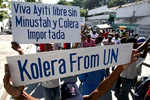 Haitian Senate Resolution: UN Soldiers Accused of Rape Should Be Tried In Place | Le Sénat vote une résolution réclamant que des soldats de l’ONU accusés de crimes soient jugés en Haïti
 U.N. Tightens Belt: No More Cruise Ship Hotels | La ONU se ajusta el cinturón : No mas barcos de crucero
 When Will MINUSTAH Leave Haiti?
 U.N. Uses Private Military and Security Contractors
Comments
Foreign Aid, Foreign Wastes — No Comments